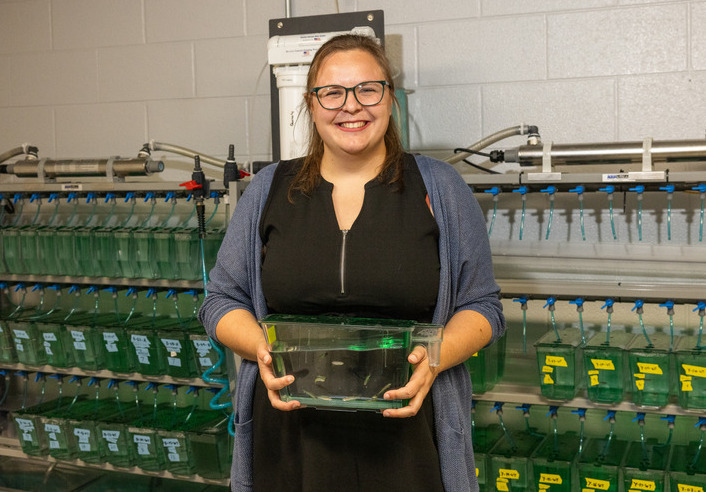
“Why study fish? Well, because they’re super cool!” laughed Katelyn Mika. Since joining The University of Tulsa’s Department of Biological Science as an assistant professor two years ago, Mika’s enthusiasm for understanding the complexities of these and other underwater inhabitants has grown from strength to strength. Along the way, she has welcomed and mentored numerous students on this quest to unlock the secrets of marine life.
Focusing on marine organisms, members of the Mika Lab investigate how cells determine and maintain their identity in changing environments. “Our work on cell types and how they establish and maintain their identities will add to the growing conversation on how new organismal forms or traits evolve and develop,” she explained.
Why is a fish not a pancake?
From an evolutionary perspective, Mika noted, fish capture many of the steps leading to the development of traits seen in many other animals today, including humans. But their unique environment brings challenges that are different than those faced by terrestrial creatures.
One of those habitational challenges has led to one of the main questions Mika seeks to answer: Given the pressure fish experience living underwater, why are they not flat like pancakes?
As an organism descends deeper into the ocean, light dims and then, eventually, disappears. In addition, temperatures plummet, food becomes scarce and pressure builds so intensely that even water is compressed. “What we want to discover,” Mika remarked, “is how fish and other organisms respond to the changing pressures they experience as they move closer to the surface or further into the depths. Our efforts will be some of the first molecular studies undertaken to investigate this question.”
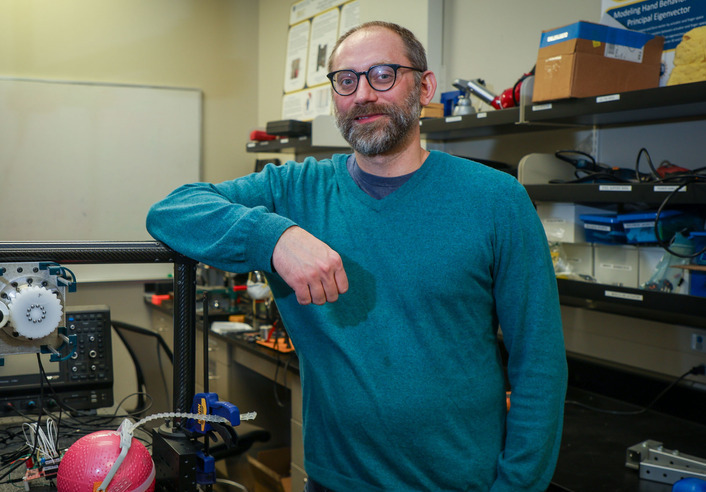
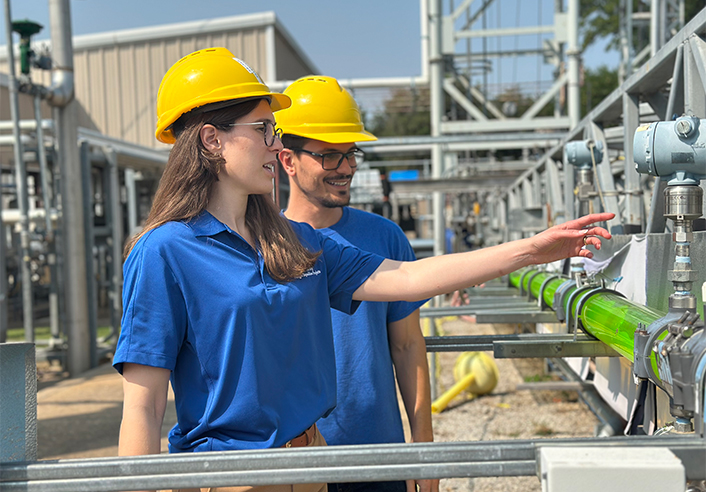
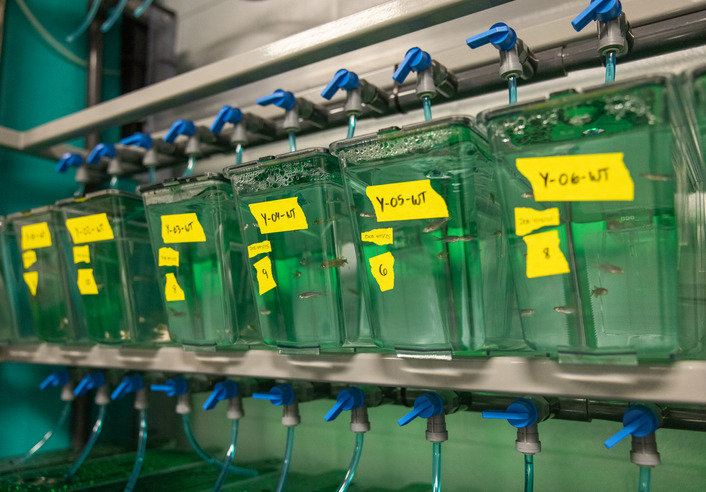
The team’s research encompasses in-house experimentation and field work. Mika Lab students are collaborating with Assistant Professor Alexandra Kingston (biological science) and Professor Michael Keller (mechanical engineering) to build pressure chambers capable of mimicking underwater depths of up to 1,650 meters. “This technology will enable us to conduct a classic selection experiment to determine how zebrafish, gobies and snapping shrimp respond genetically and cellularly to changing pressures over generations,” Mika said.
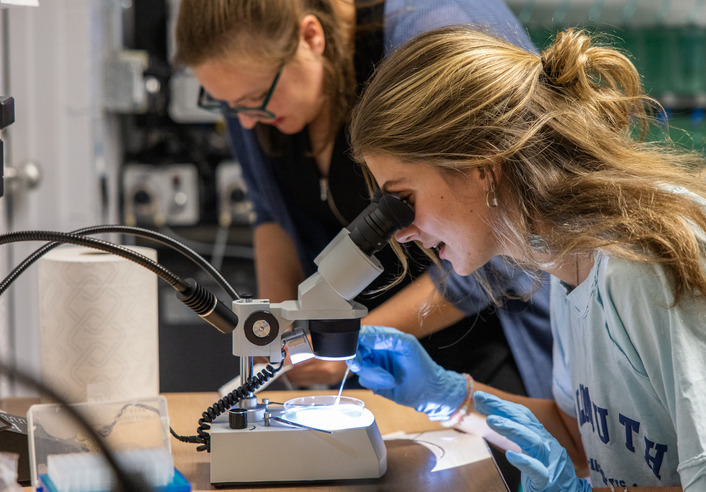
One of the students assisting Mika is Emery Edgar, a biochemistry junior. A member of the Mika Lab since her freshman year, Edgar is a participant in the Tulsa Undergraduate Research Challenge and was deeply involved in the fish-under-pressure research this past summer.
Her tasks included setting up overnight matings and collecting eggs in the morning, staging embryos and placing them in the pressure chambers at their respective pressures, euthanizing the fish once they had reached the desired developmental stage, stabilizing the RNA and preparing embryos for shipping and processing. Throughout, she also helped fine-tune the experiment and onboard other students.
“Involvement with this research as well as with other Mika Lab investigations has allowed me to apply the concepts and skills I’ve learned in my courses in a really enriching manner,” Edgar commented. “Dr. Mika’s lab has pushed me to constantly redefine what I’m capable of. I’m so grateful for the experiences and guidance I have received.”
Outside the lab, Mika and several students plan to scuba dive around Florida and other locations to collect gobies and snapping shrimp. Their aim will be to see how the same species responds genetically and cellularly to different depths.
Research implications
Taking a broader view of her fish-under-pressure research, Mika identified three exciting implications.
To begin with, the pressure chambers being constructed at UTulsa and the experiments they will conduct hold the potential to influence bioinspired design connected to understanding how structures withstand high pressures. Such knowledge will be useful for exploring extreme environments on Earth and beyond. In addition, given the scarcity of such pressure chambers globally, Mika foresees UTulsa’s units opening new avenues of research and collaborations in the United States and abroad.
From a medical perspective, Mika points out that the structures of DNA, proteins and cell membranes are crucial for all forms of life. The work she and her team are carrying out on marine creatures will begin to answer how a cell stabilizes itself in response to pressure, the genes and pathways it turns on and when – or how much – pressure is needed to generate those responses. “Our investigations may someday contribute to medical innovations for humans because basic processes, such as cellular signaling and development, are core processes in many diseases, including cancer,” she said.
Finally, as with so much biological research these days, there is a connection to climate change. As surface water temperatures rise, many species of fish are migrating toward the poles and swimming deeper. According to Mika, descending even just a meter to find cooler waters, the environmental component that likely changes the most is pressure. “Our efforts will, I hope, illuminate why moving up and down the water column is so difficult,” she said. “With this information, we should also be able to comprehend more precisely how marine organisms are responding to a warming planet.”