Ahmad Amiri, Ph.D., assistant professor of chemical and mechanical engineering at The University of Tulsa, has secured a U.S. National Science Foundation grant to research critical challenges for energy storage in extreme temperatures.
The project, titled “Solvation Dynamics in Dual-Solvent Systems for Enhanced Electrochemical Performance at Ultra-Low Temperatures,” aims to make lithium-ion batteries work in temperatures as low as -80 degrees Celsius. This capability is essential for technologies such as electric vehicles, aerospace systems, defense applications and renewable energy storage to operate properly in extreme conditions.
College of Engineering & Computer Science Dean Andreas A. Polycarpou is partnering with Amiri on this project. His research interests include tribology, micro/nanotribology, nanomechanics, microtribodynamics and advanced interface materials.
“Receiving the National Science Foundation grant further validates the importance of this project,” Polycarpou said. “Advancing energy is historically a key pillar of our research here at the college, and I am pleased to see this interdisciplinary work continue.”
The NSF-funded research has broad applications. Internationally, the project will contribute to the global push toward sustainability, electrification and climate adaptation. Nationally, the results will support the priorities for efficient energy systems within the U.S. Department of Energy and Department of Defense.

“Our team is developing a new class of dual-solvent electrolytes engineered at the molecular level to enhance lithium-ion transport, interfacial stability and overall performance under extremely low-temperature conditions,” explained Amiri. “This research is important to all organizations and companies because it enables reliable battery performance in extreme cold, expanding the reach of clean energy technologies, electric vehicles, aerospace systems and critical infrastructure anywhere on Earth with cold weather and in space.”
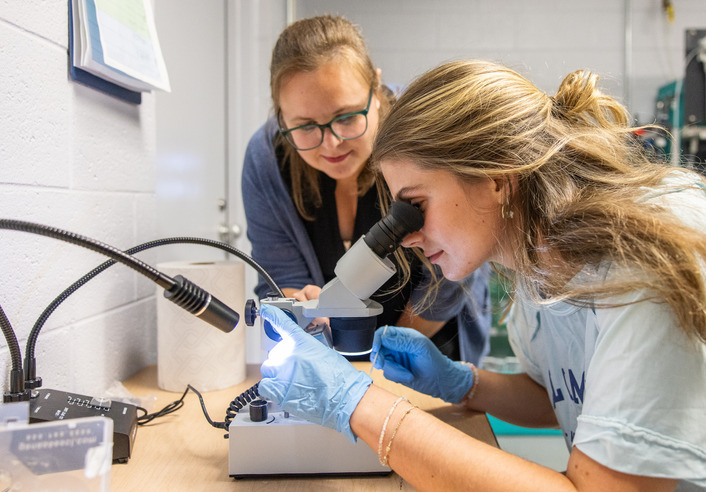
At UTulsa, students engage in hands-on research, completing projects in Amiri’s energy storage lab while gaining experience in electrochemistry, materials science and computational modeling.
The project also includes outreach and mentorship being developed for K-12 students in Tulsa and beyond, sparking interest in science, technology, engineering and math.
“We are deeply committed to community engagement and expanding access to STEM careers,” Amiri said. “Through this project, we are collaborating with the community to provide research exposure, mentoring students with disabilities and those from underserved backgrounds.”
Amiri emphasized that UTulsa doctoral students Akif Rahman and Hossein Shahali were instrumental in this project, which is part of the College of Engineering & Computer Science’s legacy of innovation and service.