A drone-powered system built by five University of Tulsa seniors may help revolutionize how America’s small cattle farmers track and care for their herds. The solution won second place in a National Aeronautics and Space Administration (NASA) 2025 AgAir Aviation Solutions competition in Palmdale, California. The team’s solution, the CattleLog Cattle Management System, was one of the finalists selected to present at the NASA 2025 Gateways to Blue Skies Competition.
Other finalists selected were: Auburn University, Boston University, Columbia University, Embry-Riddle Aeronautical University, Houston Community College, South Dakota State University, and University of California Davis.
Sponsored by NASA’s Aeronautics Research Mission Directorate, the competition asked for a solution that would create a new or improved aviation project to support agriculture by 2035. The end goal was to create different solutions from each university that would enhance sustainability, resources, and production in the agriculture industry.
The CattleLog team started by determining what specific problem they wanted to solve. It was by chance that a team member’s family are local cattle farmers in Oklahoma.
“The idea for CattleLog took the team the majority of our first semester to fully define,” said mechanical engineering senior Nate Husen. “One of our team members, TJ Knight, connected with some of his family in Haskell, Oklahoma, working with them on their livestock farm. We determined that small cattle farms were the target user group we wanted to address after seeing a large discrepancy between large and small farms in terms of production.”
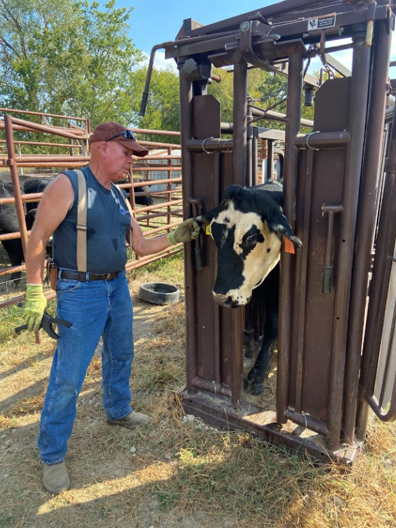
After analyzing the United States Department of Agriculture (USDA) data, the team noticed that small farms owned the largest proportion of land by 45% here in the United States. However, production rates were only 18%, meaning small farms could make major gains in efficiency. After working extensively with Knight’s family at the farm, the team determined that the best aviation solution would be a cattle tracking system that integrates drone usage, GPS tracking, autonomous flight paths, and Light Detection and Ranging (LIDAR) sensors that allow the drone to maintain a fixed elevation above obstacles. By creating this solution, this could help increase efficiency in tracking the cattle’s location, health, and behavior patterns.
UTulsa’s team was mentored by mechanical engineering professors Marie Moran and William LePage. The team implemented the “design thinking” process to develop CattleLog.
“By the end of the project, the team was budding experts in the design-thinking process,” said LePage. “They learned how to teach themselves new knowledge and dive deep to make a viable solution. Those skills will carry forward throughout their careers.”
The team said their professors were essential to their success. Their teaching method pushed them to deeply understand issues farmers have.
“Professors LePage and Moran were instrumental in our success in the competition,” continued Husen. “They both advocated for the team to constantly evaluate our proposal and design based on the needs of real-world farmers. It ensured we would be thinking of the needs of our users at every step along the way.”
These experiences are part of UTulsa’s dedicated effort on student-centered research and partnerships within the local community to enhance the education and experience gained by our bright students. By blending hands-on engineering with real-world agricultural needs, the CattleLog team demonstrated the kind of interdisciplinary thinking today’s most innovative and forward-thinking companies are demanding from the next generation of engineers