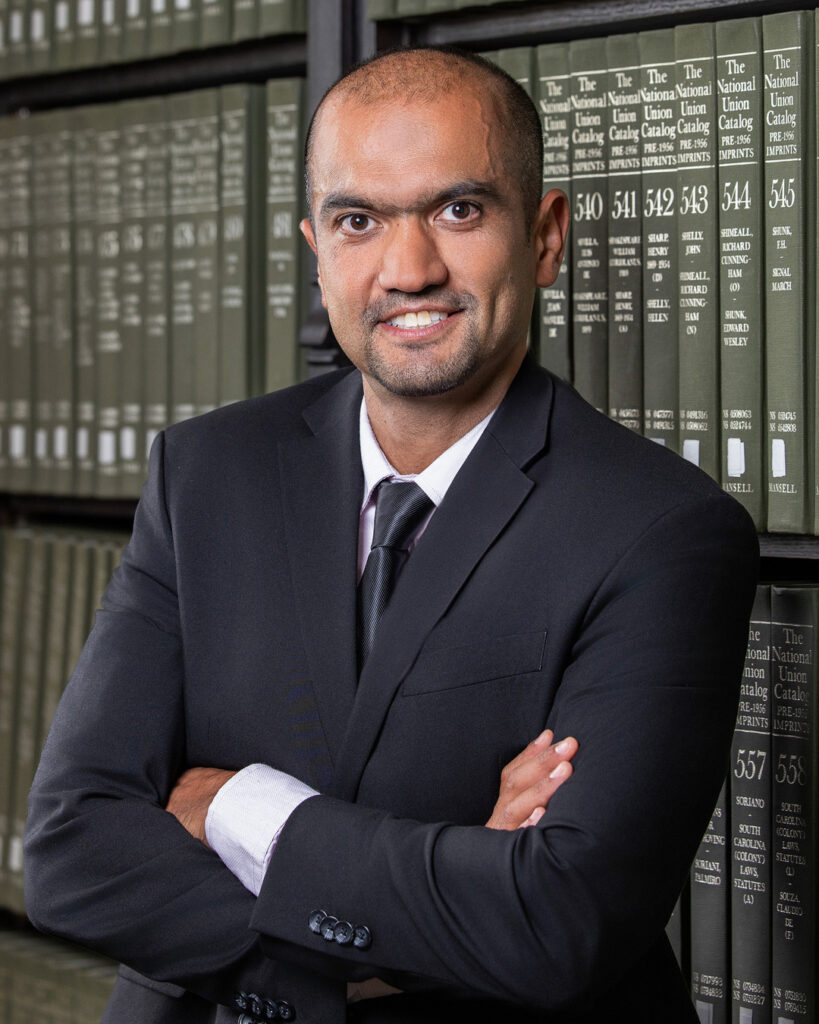
Mohammad Khajenejad, Ph.D., assistant professor of mechanical engineering and electrical and computer engineering, has secured a U.S. National Science Foundation (NSF) grant for his project titled “Combining Guaranteed Privacy and Resiliency in Dynamic Cyber-Physical Systems.”
This is Khajenejad’s first NSF grant as a faculty member in The University of Tulsa’s College of Engineering & Computer Science.
“Receiving this award in my first year as a faculty member is deeply encouraging. It validates the direction of my research and provides the resources needed to establish a long-term research agenda here at UTulsa,” said Khajenejad.
The project targets cyber-physical systems (CPS). These technologies – such as autonomous vehicles, multi-agent robotic teams and smart grids – offer enormous benefits but also carry serious security risks. Malicious actors could manipulate these systems or steal sensitive data, potentially causing widespread disruption.
Khajenejad’s project aims to develop systems that can protect themselves during cyberattacks while maintaining normal operations.
“At the heart of my research is the belief that autonomy without security is incomplete. I’m deeply interested in building systems that don’t just perform well in ideal conditions but continue to function safely and reliably under uncertainty, failure or even deliberate sabotage,” he explained. “Ultimately, I’m driven by the potential impact these ideas can have in building trustworthy intelligent systems for the public good.”
The project is interdisciplinary, combining control systems, cybersecurity, optimization and machine learning. This integrated approach enables enhanced effective responses to the complex challenges of securing automated systems.
The project will support student research opportunities from UTulsa’s undergraduate programs to Tulsa Cyber Camp. Khajenejad also plans to collaborate with the university’s Oklahoma Cyber Innovation Institute.
“It’s not just about solving technical problems; it’s about training students to think critically, ethically and creatively about the challenges of autonomy in a connected world,” he said.
Globally, the research addresses critical infrastructure protection. “This research addresses urgent needs in protecting critical infrastructure. From securing autonomous vehicles to resilient power grids, this is contributing new tools and algorithms for safer autonomy,” said Khajenejad. “As more CPS technologies are deployed worldwide, ensuring their privacy and resiliency is essential to protecting public safety and societal trust.”