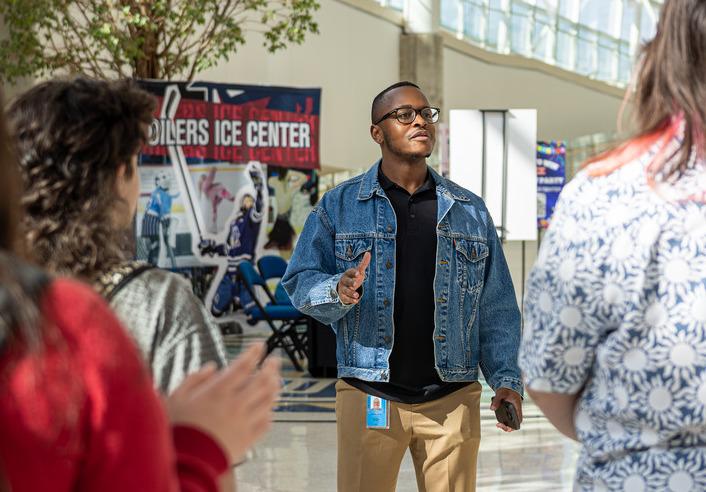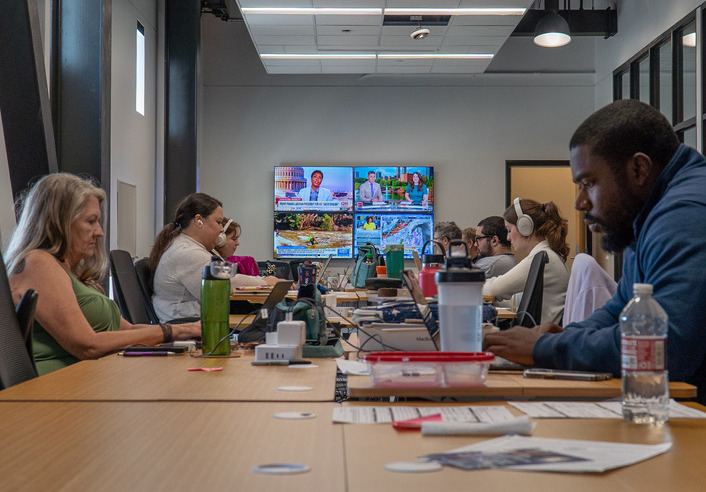
This summer, eight students from the Tulsa Undergraduate Research Challenge (TURC) program at The University of Tulsa and two high school students, called TURC Junior scholars, examined thousands housing records to better understand how to detect blighted local properties. The project, titled “Housing Challenges and Opportunities: Detecting and addressing blighted housing in Tulsa,” was a continuation of last summer’s “Housing Challenges and Opportunities in the Tulsa Metropolitan Area” project with the overall goal of improving the housing landscape in Oklahoma.
Blight is often indicated when properties, whether vacant or not, have been neglected and are in a state of disrepair to the extent that they impact the experience of others living nearby. By detecting warning signs that are associated with higher likelihood of future housing blight, the students found ways to prevent the loss of that housing – and occupants becoming unhoused – as well as helped the city know how many properties truly are blighted.
The project was conducted in collaboration with UTulsa’s Center for Real Estate Studies and overseen by Associate Professor Meagan McCollum and Assistant Professor Cayman Seagraves.
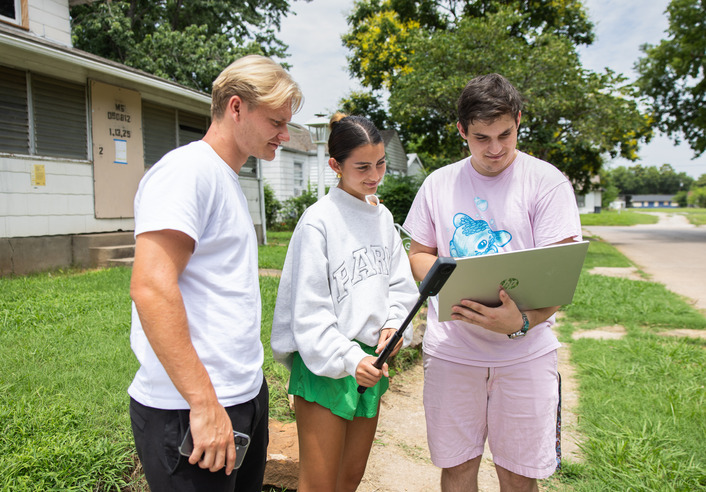
The TURC students spent the summer developing their data management and visualization skills; conducting field work that involves visiting housing communities with blighted properties that have existing data about them, such as tax records, nuisance reports and probate records; and taking pictures of the properties to train an artificial intelligence model so that blight can be identified more easily.
The students were split into two teams, with McCollum leading a team on policy analysis, data collection, peer city comparisons and regression analysis, and Seagraves leading a team focused on AI-solutions, blight detection algorithms and workflow development. The two streams work in tandem toward the end goal of identifying blight and predicting future blight probabilities.

Through the program, the students took part in a hands-on learning experience that taught them professional skills while helping their community. “It’s been really nice to see the different sides of real estate and the diversity of careers that might come out of this: real estate education, nonprofit work, all the way up to developing or real estate tech businesses,” said Mori Kurland, a finance and international business and Spanish major going into his second year.
“This program has made me love UTulsa even more,” said Manvi Pinnapareddy, a TURC junior scholar from Union High School who is considering attending The University of Tulsa. “These programs actually contribute to society and help Tulsa become a better place.”
Working alongside Kurland and Pinnapareddy were mechanical engineering and economics sophomore Nathan Exum, economics sophomore Ella Calvert, data science and economics junior Anna Hart, finance and real estate senior Gijs Hovius, marketing and Spanish senior Nat Maldonado and finance and real estate juniors Katrina Henderson and Shawnda Henderson, as well as TURC junior scholar Karter Flournoy of Holland Hall High School and Collins College of Business graduate assistant Cat Thomason (B.S.B.A. ’24).
The students shared their personal research in blog posts. On Aug. 8, the group gave their final presentation to showcase what they have learned and shared the findings with city officials.